Wednesday, March 30, 2011

Getting It All Done - Quick and Dirty Tips

There are tons of organizational gurus out there these days. Oprah has about 12 of them on speed-dial. Getting organized is now a multi-million dollar industry. Because, let's face it, our lives are a mess. 

As part of the Quick and Dirty Tips website, the Get-It-Done Guy, Stever Robbins' podcast the Get-It-Done Guy's Quick and Dirty Tips Guide to Work Less and Do More, now has over 170 episodes and covers all sorts of tricks and techniques for handling almost any type of organizational task. 

From forming a new habit (Episode #163) to creating text macros (Episode #167), Robbins covers techincal issues and decisions (such as buying a computer - #154), dealing with specific organizational problems (such as organizing gift and credit cards - #165 or planning a successful group trip - #161), or general work habits (such as how to use the phone better - #151 or making good decisions - #111).

Stever Robbins also has a lot of great advice specific to writers to help us with the glut of information that all workers in the 21st century encounter... but writers in particular. 

His podcast is short, too the point, and (at times) humorous. Whether he is advising you on how to file so you can find anything Instantly (#3), taking killer notes (#16), or keeping track of ideas (#153), Stever knows how to deliver the advice you need during a minute or two of your precious time.

Monday, March 21, 2011

How Much is Your Clutter Costing You?

This article written by Peter Walsh, clutter crusher extraordinaire from Clean Sweep fame has a new book out Lighten Up: Love What You Have, Have What You Need, Be Happier with Less and excerpted on Lifehacker: How Much is Your Clutter Costing You?

He has some simple ways of adding up the costs by going through your house, room by room, and adding up the cost of all of the items you no longer use.  It has a physical cost and (at times) an emotional cost as well.

He even uses a formula for calculating the cost of your clutter per square foot:

Value of your home ÷ Square footage of your home = Value of each square foot
_______________ ÷_______________ = _______________
So, if you live in a $250,000 home and it's 2,500 square feet, then each square foot is worth $100.
The value of each square foot of my home is: _______________
Now let's calculate how much of your home's space is occupied by things you don't use. Walk around your home and make a rough calculation of how many square feet are unusable because of the clutter. Don't forget the basement, closets, and garage!
The number of square feet in my home that are occupied by things I don't use: _______________
Now let's find out how much that wasted square footage is worth:
Value of square footage × Square feet occupied by things you don't use = Value of unusable space
_______________ x_______________ = _______________
This is interesting, but not as helpful for me.  Another way to calculate these costs is in TIME.  Such as when you spend 15 minutes looking for your car keys in the morning, or the hour spent looking for the medical form that you needed to complete so your son could sign up for soccer. Or the 2 hours you spend trying to find the Robo-Grip Pliers to fix the dripping kitchen sink, and then, not finding it, heading out to Lowes to purchase another tool to replace it.  Time is money. And these days my time is more valuable than my money... most of the time.

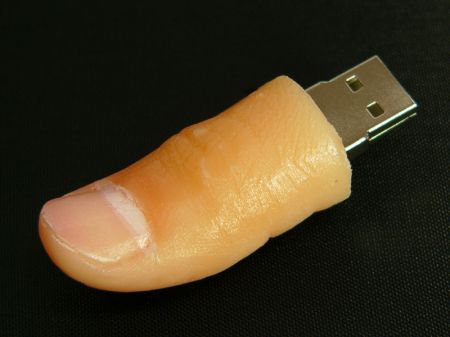
But money is also something that gets wasted in the midst of clutter.  You all know of my poor track record with flash drives.  I have purchased 3 of them in the last 4 months, and have already "lost" one of them.  I know that it will turn up eventually in a coat pocket, or under a stack of papers, but it is missing when I need it, so I buy another one for $12.  The cost of replacing the Robo-Grip Pliers, $17.94 for a set of similar tools at Lowes.  I've bought 3 vitamin capsule-sized microphones for my iPod Touch because I simply knew I wouldn't be able to keep track of them (at about $1.50 each) and already 2 of them are missing. 2 sets of iPod headphones (another $12). I bought a second copy of one of my favorite books on time management: Getting Things Done by David Allen, because I either lent it to someone and forgot who, or lost it altogether ($15).  And close to $50 in lost or damaged library books this year alone.

So as you can see... clutter indeed has a cost.  Think of all of the items and hours lost, and spring cleaning is a great time to clear out that clutter.

Friday, March 11, 2011

Have You Visited Lifehacker Yet?

If you don't know about Lifehacker yet, you are missing great content.  You will be seeing a lot of links from me here to that site.  It has a lot of great tips on time management, self-improvement, as well as lots of practical advice on daily life, such as this article on getting better customer service, technical how-to's such as this one on recovering from an e-mail disaster, and reviews and information about products and services that may make your life better.  

What Can We Do With Flickr?

This site has fresh content hourly and you never know what kind of advice it will generate.  Today's featured articles focus on disaster preparedness in the wake of the catastrophic earthquake and tsunami in Japan.

In addition, the site allows you to link it to your Facebook and Twitter accounts, see 49 of the most popular articles right now, and search the massive Lifehacker archives via the Search feature.

So do what I do, set up an RSS feed for it in Google Reader, or just bookmark it.  Then, check it out daily.  It will be well worth your time. Lifehacker gets ***** out of 5 stars.

15-Minute Writer Rating Scale: * - SPAM is more enjoyable and entertaining; ** - Content not fit for a link farm; *** - An OK site, probably won't be back here often; **** -  Good resource, bookmark and visit often; ***** - An essential resource to consult daily.

Monday, March 07, 2011

15-Minute Writer Manifesto

I did this for my other blog, Grist for the Muse, so it makes perfect sense to do the same with 15MW. I have struggled keeping a blog on this topic. 

This was supposed to be inspiration and support for what was going to become my next book: The 15-Minute Writer: How to Live Your Creative Writing Dreams in Just 15 Minutes a Day. The proposal got fried on a flash drive that I didn’t back up. I have most of it in hard copy, but the topic really didn’t fire me up. I just didn’t connect with it. It felt like I had declared it to be my next book project simply because it was a cool premise with a cool elevator pitch that a couple of agents thought would be engaging. That was back in 2007. I do still like the concept though. The 15-Minute Writer will be a book someday, maybe even a series of books, but not for a while. 

Writers finding time to write is a universal problem that few people address on an ongoing basis. I hope the 15-Minute Writer will fill this void with good advice, cool products, and excellent resources.

The 15-Minute Writer covers tips, tools and topics for your writing time-management needs to help you live your creative writing dream in Just 15-Minutes a Day. I will do this by adhering to the following guidelines:
  1. Not to rely so much on my experiences and knowledge for the blog. You can get that anywhere on the web. I’ll still put together original articles and content, just not rely on it as much as a basis for the blog.
  2. Focus on content that either helps you write faster, or saves you time and money which frees up some time for writing.
  3. Post cool things of interest about writing, time management and organization that I stumble across on other blogs and web-pages.
  4. Inject my “humble” opinions on these items of interest, when applicable.
  5. Not be so afraid to inject my “humble” opinions on those items of interest, the writing life, or life in general.
  6. Post more often. At least once a week, although I’d prefer to make a habit of posting 2 or 3 times a week, to keep you coming back to see what’s going on.
  7. Answer and thank those who take the time to leave comments on my posts.
  8. Share my journey – Because I struggle with these issues just like you do. I have a day job, 4 kids, a menagerie of pets, a house and a yard and all of the responsibilities that come along with them. So it is hard for me to juggle all of these flaming chainsaws and still get the writing done.
  9. Stop being such a technical idiot. Learn to format these entries so they can be easily read. Maybe how to put a nifty picture or two in ‘em from time-to-time. I’d like to overhaul the design of this while I’m at it… but not right away.
  10. Stop being such a perfectionist. Perfectionism wastes time.
  11. Be entertaining. There are so many interesting and engaging writers out there. I want to be like them. And help you get writing done.
  12. Continue the Shameless Self Promotion. A guy’s gotta eat, right?
  13. Be available to answer your questions.
  14. That these guidelines of this manifesto are fluid and subject to change as determined by my mood, audience response, and interests change.

Monday, February 15, 2010

Keeping It All Under Your Thumb

This one is for all of you PC users out there.  If your system is running slow and this little things like running Scandisk and Windows Cleanup don't seem to improve performance of the computer, consider re-imaging the hard drive and start with a fresh installation.

It is time consuming to do this, but even more time consuming and frustrating to be stuck with a sluggish computer. 

Here's a tip to ease a little of the pain. Store many of the installation packages for the programs you use frequently on a thumb drive or CD-ROM.  With the cost of these drives being less than $20 for 4 to 8GB of storage, you have room to store many programs and drivers as well as your critical files.  You can also set this drive up as an emergency boot disk.

On my thumb drive I store my downloaded packages for my virus protection (I currently am using AVG Anti-Virus), anti-spyware packages (Spybot and Ad-Aware), the printer drivers for the 3 printers I use most often, OpenOffice installer, and various utilities such as Adobe Acrobat Reader, decompression software, iTunes, and a couple of other shareware utilities that I commonly use.  Granted they are not always the latest version of the program, but once you have the program reinstalled, most packages ask if you'd like to update them anyway.


This gets all of those packages that you were going to reinstall anyway all in one place to make it a little bit faster to get your system back up and online.

Saturday, February 06, 2010

Losing Things

I am always losing things.  Not just little things like the car keys for a few minutes or a favorite book that I lent to a friend and forgot about... We're talking about big things. Important things. Favorite things. Things that will cost me money if I don't find them soon.

Here are a few of them:
  • Car/House keys -- Attached to my blue bottle opener keychain with the logo of the company I worked for before the current one bought it.  Maddening. The only keyring where I have all of my important keys in one place. I also have about 4 copies of our garage key floating somewhere out in the house somewhere.
  • 2 Library books -- I am having a record year having broken 2 CDs from different books on CD and now I have 2 other books missing. I have no idea where they are, but I keep renewing them online in the hopes that I find them.  I think it is to the point now for one of them that I need to 'fess up and pay for it.
  • RoboGrip adjustable wrench -- I use it a lot, but forgot where it is for now.
  • Switch plates for the kitchen outlets -- We took them off when painting the kitchen over a year ago, but I forgot where I put them. Serves me right for procrastinating.
  • The New HDTV remote -- We bought the TV in an insane "Black Friday" sale.  The remote has been lost for about half of the time that we've owned it.
  • My planner/datebook -- Strange since the point of having one is so you don't forget what you have to do...
This list is an ongoing revolving door that never seems to end.  And it constantly drives me crazy that I can't find these things that should never have gotten lost in the first place. I'm almost ready to start believing in Gremlins at this point.  Or House Elves... a ghost?  


I almost see the advantages of RFID tagging everything.  Although it would be an invasion of privacy in some ways, a little too Big Brother-like for me, it would be nice to look up where all of your lost objects with a couple clicks of a mouse.  Imagine how this would change the way we deal with mismatched socks, unidentified keys that we cannot part with, the REMOTE CONTROLS... Hmmmm.

Sunday, August 09, 2009

Muse Reviews: Throw Out Fifty Things

Throw Out Fifty Things: Clear the Clutter, Find Your Life Throw Out Fifty Things: Clear the Clutter, Find Your Life by Gail Blanke


My rating: 4 of 5 stars
If you saw the condition of my home office right now you’ll immediately understand why this book intrigued me. It has way too much stuff in it. Bookshelves overflowing. Papers piled in baskets, in computer paper boxes, or just scattered around. My daughter has clothes she wants to sell on eBay, I have hundreds of HeroClix figures and accessories that also need to go on eBay. Scrap wood, library books, old magazines, cardboard boxes, bags and packing material, old printer and computer equipment all stored haphazardly throughout what once was a rather large and impressive workspace.


Ms. Blanke takes a concept made popular by shows like TLC's Clean Sweep and presents an unintimidating method to attack the mind-boggling, energy draining piles of STUFF that we collect and retain under the idea that maybe we should keep this because it will be useful someday. She asks you to consider the value of the object vs. the amount of energy that it sucks up in exchange for its continued existence. Sure, those cheap wire hangers that you have gotten from the dry cleaner for every item that you’ve taken there since 1993 might come in handy someday… but do they need to take up all of the rod space in all of your closets? I have a huge Rubbermaid tub FILLED with just power adapters and cables that I don’t know what to do with. I have no idea what they go to… cell phone chargers, video game systems, computer monitors, portable phones, and more. All of the plugs are different, so when I find myself desperately seeking the proper adapter for recharging the video camera battery, it is never there.


Throw Out Fifty Things walks you through the process of getting rid of the stuff that is draining the energy away room by room and gives you options for passing along items that you no longer use to others or recycling them. Now Michael, you say, I could throw out 50 things in the front entryway of my house… sure you could, except for one little ingenious twist thrown in by Blanke. Any of the same object is considered to be only one object of the fifty to get rid of; Hence, all of those cheap hangers in every closet in the house… one item on the list. That tub of AC adapters? One more item and so on. So say good bye to all of those single socks with no mates, those ugly gifts that you received from Aunt Margret taking up precious space in your hall closets and attics. If it drains energy from you when you see it… no matter what it is or how useful it is… GET RID OF IT.


Among the 50 things that you are going to throw out are psychological. Ideas such as letting go of mistakes from the past, the need to have everyone like you, or having to do everything yourself. All of these things drain your energy that can be better spent elsewhere and contribute to the generation of physical clutter as well.


The book is easy to read and provides space for you to create your own list of throwaways as you work through the book. It also provides many examples from Ms. Blanke’s personal experience and those she encountered working as motivational consultant. Last, the book also provides a resource list for ideas on how to get rid of those things that you might not know what to do with, but are still usable or recyclable. All in all, excellent book with good information. I highly recommend it.

View all my reviews >>

Thursday, March 12, 2009

Starting All Over Again...

Wow. Almost 2 years since the last post in this blog. But this is not a reflection on the topic itself, just the dedication of the author who writes about it. Finding time to write is still an obsession of mine and an issue for most of the writers I meet. How do we find time to write during our busy lives? We are not full-time professionals or best-selling authors who live solely by the royalties of our hugely successful best-seller backlists, as well as our current #1 New York Times best-selling novel that happens to be a hit with critics as well as fans.

We have day jobs. We are stay-at-home moms and dads. We sell everything from ad space in the local weekly to new Hummers (good luck with that in this economy). We fix things: cars, laser printers, leaky toilets, and leaky heart valves. We drive yellow school buses, build condos, roof houses, teach classes, and millions of other things. But that is just during our day jobs.

We then start the second shift and wash clothes, cook (or order) dinners, play with kids, help with reading or algebra, read Goodnight Moon (yet again), and look for monsters under beds. We go to soccer practice, Rotary meetings, bowling tournaments, and dental appointments. We also gossip on the phone with friends, play games on Facebook, watch endless hours of Oprah, Dr. Phil, and people who are Lost or Dancing with Stars. We aimlessly surf the web, obsess over bad economic news, and stare off into space.

But we all want something more: A novel on the shelf at the local Barnes & Noble, an interview with Matt and Meredith about your latest project, a room full of literary awards, or an illustrated family history to hand down from generation to generation. We want to find a little bit of room (and time) for our dreams in this never-slowing-runaway-train of a life we live.

I hope that this blog will help you find that. Through the advice and anecdotes from another extremely busy working writer; tidbits of time-saving knowledge or habits from other writers; links to helpful sites and products; and some good time-management info, I hope to help you discover and live your creative writing dream in 15 minutes a day.

Friday, July 06, 2007

Free eBook on Writing from Noah Lukeman

Those of you who know me know that I love a bargain, and here is one of my favorite writing gurus, Noah Lukeman, offering a FREE e-book How to Write a Great Query Letter at: http://lukeman.com/greatquery/Great-Query-May-07.pdf. So go forth and get a copy. You won’t be disappointed.

This book will help you develop your packaging of your manuscripts for publication. And Noah Lukeman is one of the best experts on the writing/publishing world out there right now with an interest in helping writers learn the ropes of the publishing business.

Be sure to check out his books: The First Five Pages and The Plot Thickens two excellent books for anyone who is serious about getting his/her fiction published.

Tuesday, June 19, 2007

Vacation

I broke one of the rules that so many writers live by this past week: Write everyday. On some types of vacations it is nearly impossible to write. It is not that I can’t find the time to write, I usually can, it’s just that the situation just isn’t quite right for writing.

The reasons (excuses)

  • Even when you are not driving, you are either navigating or, at least in my case, drifting off to sleep. And to help keep the driver awake and motivated, we always listen to books on CD which is always distraction.
  • Hotel room, 2 double beds, 3 kids… you do the math.
  • Our vacations usually involve a lot of sightseeing and a lot of walking, so you don’t always have a lot of energy left over at the end of the day to write, and you are usually up early to be there when the museum/park/tourist trap opens.
  • It takes a lot of time and energy to feed yourself on the road.
  • Laptops are hard to use unless you have an uncluttered flat surface to set them on. And with 3 kids in a single hotel room, how much uncluttered flat surface do you think you have??
  • I hate writing in my notebook on my lap… the only place you can write on in a car or crowded room

So I’m not a Stephen King or Walter Mosley and don’t do well writing anywhere at anytime. I need a consistent place and routine to make it work for me. I also still prefer to have no one else in the room when I write. I can do it with others there, but prefer to be alone. And I’m sure Mr. King and Mr. Mosley can afford a condo or at least an extra hotel room when traveling on vacation.